
Mistakes to Avoid When Buying a Used Toyota HiLux
A used HiLux can be a smart buy, but only if you judge the example in front of you. Relying on the badge can make buyers careless, and that is where expensive mistakes start.
Trusting the badge instead of the checks
Hearing that HiLuxes cannot go wrong is no reason to rush a viewing or skip the paperwork. Reputation describes a model, not the care and condition of the example being offered.
It lets tired examples sell for strong money while buyers assume any fault will be minor. A clean detail and fresh mats can hide years of hard work. Don’t buy the story.
Treat every HiLux as an unknown until proven otherwise. Get an independent pre-purchase inspection from a qualified mechanic. Ask for a written report covering structure and leaks as well as steering and brakes, and base your decision on that report rather than the badge.
Picking the wrong cab or drivetrain for the job
A common mistake is buying the wrong layout and trying to live with it. HiLuxes come as single, extra and dual cab bodies, with two wheel drive or four wheel drive, and tub or tray back rears. Each setup suits different use.
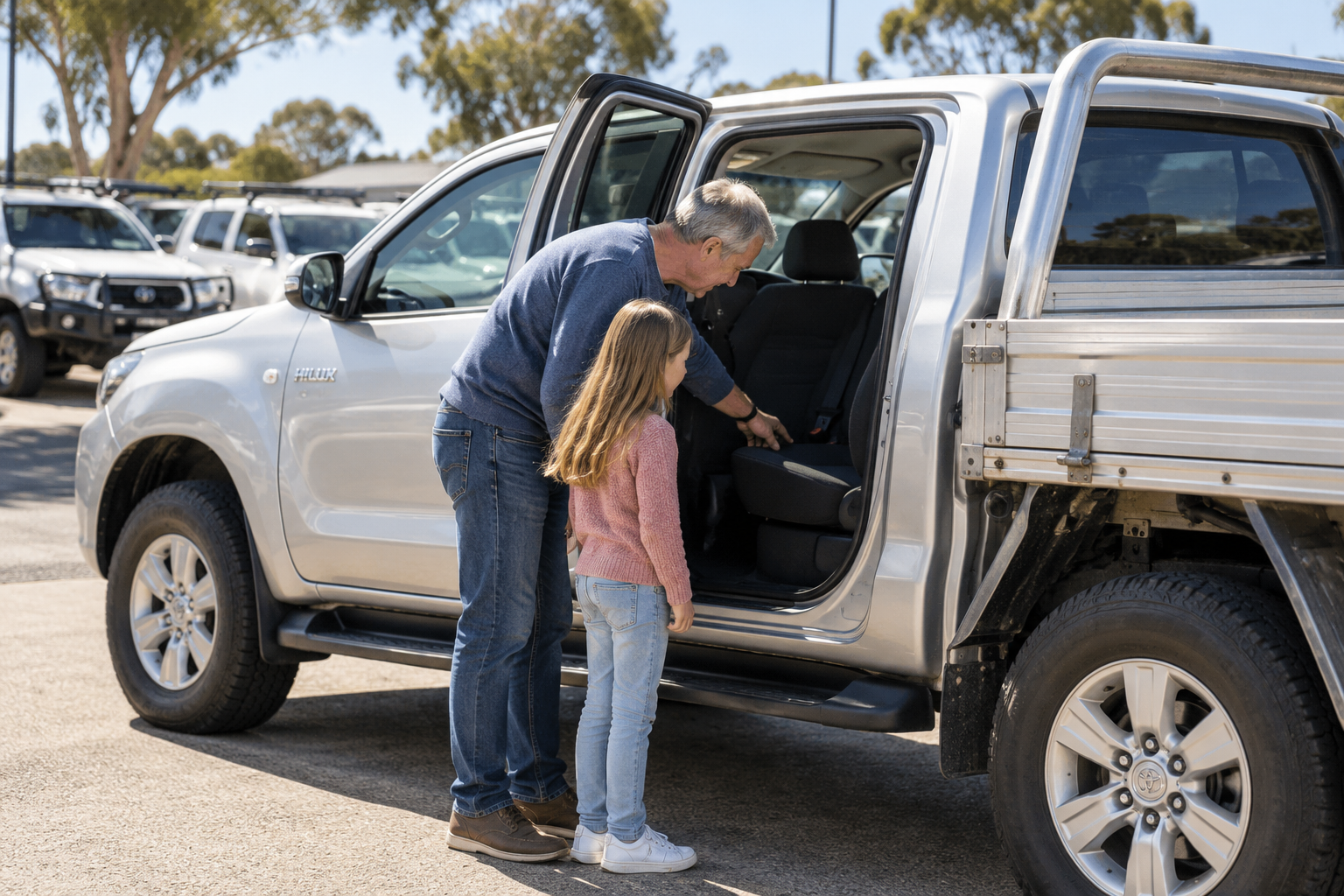
Think about your week before looking at ads. If you carry children most days, confirm a suitable rear-seat layout and restraint fit before considering the tub or tray. Four-wheel drive may be useful for the terrain you regularly use, but it does not replace suitable tyres, driver skills or checking access conditions. Compare the actual costs before paying for capabilities you rarely need.
Seat time helps here. Drive the exact layout you plan to buy. Check rear seat space with the front seats where you’d set them. Compare tray length with what you carry. A ute that is too short or too thirsty for your routine will annoy you long after the purchase feeling fades.
Paying without comparable figures
HiLux asking prices vary by kilometre reading, condition and fit-out. Buyers get caught when they fall for one ute and stop comparing. They forget to test whether the price matches other utes in similar shape.
Start with published guides such as RedBook or Glass’s Guide to set a range. Then look at live dealer stock for the asking prices of clean, serviced examples. Once you have checked history and service records, a search for toyota hilux for sale perth gives a view of local asking prices and helps you spot a ute priced well above its condition.
Don’t haggle on the phone before you know the range. Write down two or three close matches with similar kilometres and body type. If the seller wants more, they should be able to point to new tyres or a full service record that explains it. If they can’t, be ready to walk away.
It takes time, but it gives you a reasoned basis for comparing offers instead of relying on the seller’s description.
Accepting gaps in the service record
A full record is worth more on a work ute than low kilometres with no proof. Look for a logbook with regular stamps that line up with the odometer reading. Look for receipts covering oil and filters, coolant and brake work. Small gaps raise questions.
Ask the seller how the ute was used. Short trips and long idle times add wear that distance alone won’t show, as does work on dusty sites. A seller who can’t describe servicing or daily use is telling you something. Take that seriously.
Run the numbers through official channels too. A PPSR search tied to the VIN will show whether the HiLux has outstanding finance or is recorded as written off or stolen. It won’t show all past faults, so pair it with the logbook and inspection report. If any of those three conflict, pause the deal.
Coastal use deserves extra care in Western Australia. Salt air speeds up corrosion under trays and around suspension mounts. You don’t need to crawl under the ute yourself. Ask your inspector to assess the chassis, tray floor and suspension for rust or heavy tow wear and note anything needing repair for roadworthy purposes.
Overlooking modifications and rated limits
Many HiLuxes carry bull bars and lift kits. Some have aftermarket wheels, canopies or upgraded suspension. These parts aren’t always a problem, but they can hide poor repairs and change how the ute is insured or assessed.
Ask for receipts for major add-ons. Check that fitment looks neat and matches on both sides. Uneven gaps or mismatched paint can point to past damage, as can fresh underseal in one area. If a lift or tyre change looks recent, ask why it was done and who did the work.
Payload and towing need the same care. Don’t take the seller’s word for what it can pull or carry. Read the compliance plate and owner’s manual for that exact variant’s rated limits. Limits change with cab, engine and drivetrain, so a mate’s dual cab figure may not apply to the single cab you’re viewing.
Dealer and private sales also differ in after-sale protection. Australian Consumer Law guarantees apply to dealer sales, with reasonable expectations informed by factors such as age, price and condition. A separate statutory warranty may apply if the car meets WA eligibility rules. Private sales do not carry the same protections. Clarify what applies before paying, in writing where possible, to avoid arguments later about who fixes a hidden fault.
Buy the HiLux that suits your load, has clean records and passes an independent test. That discipline beats luck every time.



Be the first to reply